
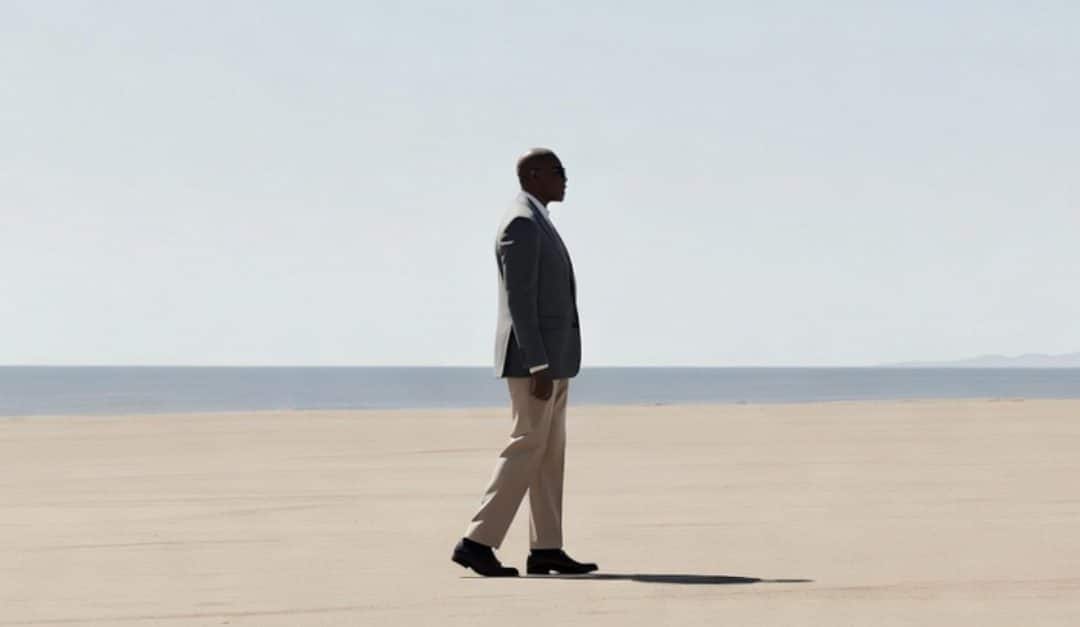
His words hit differently because I’ve been there.
My own desert came wrapped in success, or what I thought was success. I had built, achieved, and thrived for years. Then came the pandemic. Like many, I faced loss, but mine wasn’t just professional. It was financial, physical, mental, and emotional.
I had never officially failed before. Not in school, not in work, not in life. And suddenly, it was all collapsing.
That was my desert, the stripping. The long silence between who I thought I was and who I really was.
And then came my ocean, the sheer overwhelm of facing the depth of that failure. Waking up every day to the echo of what I’d lost, and realizing I couldn’t fix it with skill, strategy, or charm. It was the first time I had to admit: I am not in control.
It’s one thing to teach growth. It’s another to be dismantled by it.
Two Roads After the Desert
Sfiso was right. The desert and the ocean don’t decide who we become. We do.
When life strips you down or floods you over, you stand at a fork in the road:
One road leads to bitterness, the other to empathy.
The bitter road says, “I suffered, so everyone else must too.”
The empathetic road says, “Because I suffered, I’ll make it easier for the next person.”
Both are understandable. But only one heals.
The Mandela Choice
When Oprah asked Nelson Mandela how he managed to forgive after 27 years of imprisonment, he smiled and said,
“Because I had 27 years to think about it.”
That wasn’t a clever line. It was the product of deep interior work.
While his body was confined, his heart was expanding.
Mandela’s desert gave him time to choose what kind of man he’d become. He decided not to walk out of prison a warden, but a healer.
That’s what real freedom looks like, not just walking out of your cell, but refusing to carry it with you.
When Success Turns Into a Standard
Sfiso’s insight lingers because it exposes something subtle but dangerous: once we’ve survived our desert, and especially once we’ve succeeded beyond it, we can become judges instead of guides.
We start to believe that our way through the wilderness is the only valid route.
That others must pay the same price, endure the same length, bleed the same amount.
But empathy requires us to remember that deserts and oceans are personalized, not standardized.
What refined you might drown someone else.
Real wisdom doesn’t demand people suffer like you. It helps them suffer better than you did.
Deserts, Oceans, and Becoming Whole
Hardship doesn’t automatically produce holiness. Some come out of it hardened, some humbled.
The difference isn’t the fire, it’s what we let it burn away.
Pain can calcify or clarify.
It can make you small, or it can make you spacious enough to hold the pain of others without resentment.
And that, I’ve learned, is the mark of maturity: when you stop needing others to struggle like you did to respect their growth.
The Choice We All Face
So, what will you become after your desert or your ocean?
Will you guard your story like a trophy of endurance, measuring others by how well they match your scars?
Or will you become a well in the wilderness, a source of water for those still walking their miles?
Mandela chose healing. Sfiso chose humility. And I’m still learning that the desert’s greatest gift isn’t what it takes away, but what it reveals:
Who we truly are when there’s nothing left to prove.
Because deserts and oceans don’t just test us.
They ask us to choose, bitterness or empathy, ego or evolution.
And only one of those paths leads home.
Vusumuzi (Dominic) Tshabalala
Ready to help your leaders move from survival to empathy and maturity? Click here to start a conversation with our team.
Explore more leadership insights in our MCA Blog.